ChatGPT Ads Go Self-Serve as OpenAI Expands to New Markets
OpenAI opened a self-serve ads manager beta for ChatGPT in May 2026, adding UK, Mexico, Brazil, Japan, and South Korea to its rollout while keeping paid tiers ad-free.
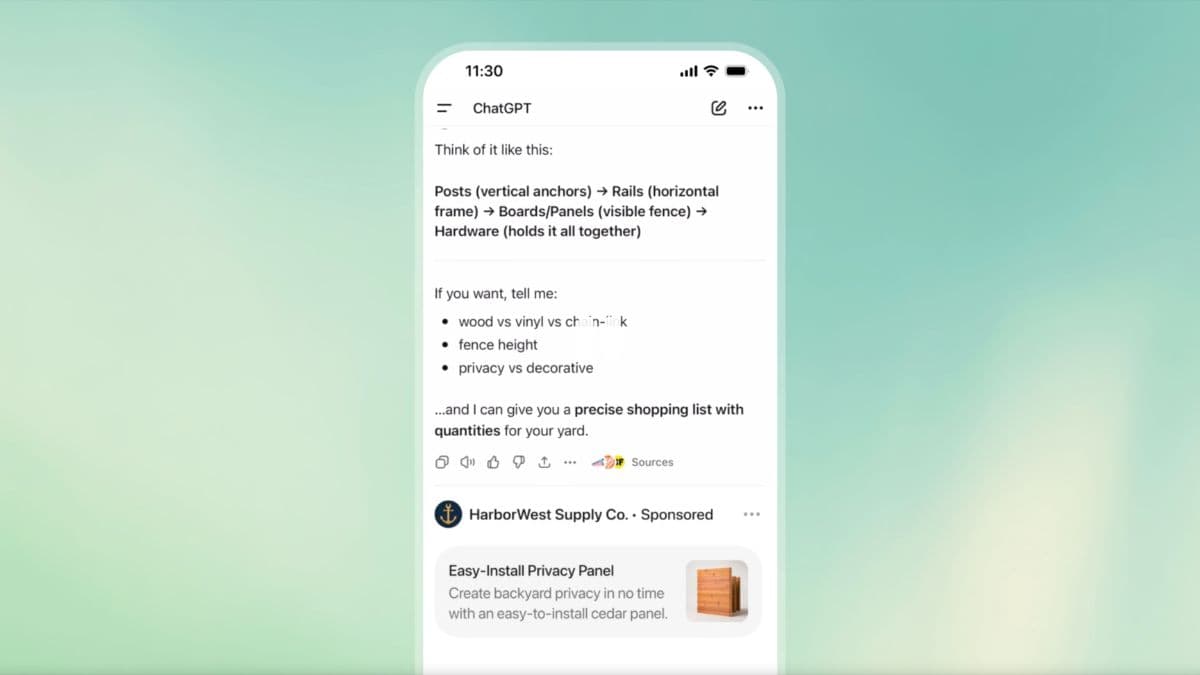
OpenAI has moved ChatGPT advertising from a closed, invitation-only pilot into a self-service platform available in beta to U.S. advertisers, while simultaneously expanding the ad rollout to the United Kingdom, Mexico, Brazil, Japan, and South Korea — a commercialization push that transforms the world's largest AI chatbot into a formal advertising medium.
From Pilot to Platform
Advertising in ChatGPT began as a controlled experiment in February 2026, limited to a narrow slice of Free-tier users in the United States with a handful of pre-selected brand partners. The May 2026 expansion changes the structural arrangement in two ways simultaneously: it opens the buying side to any brand willing to use the self-serve ads manager beta, and it extends reach to five new national markets with a combined internet user base exceeding 400 million people.
The self-serve manager operates on a cost-per-click model with competitive bidding. Three ad-tech partners — Pacvue, Kargo, and StackAdapt — are integrated into the platform, giving brands the option to purchase ChatGPT placements through existing campaign tooling rather than directly through OpenAI's interface. Measurement tools and cross-channel attribution capabilities have been added alongside the self-serve launch, addressing an early advertiser complaint that the pilot offered limited performance visibility.
Pacvue president Melissa Burdick called conversational AI "the most significant new channel since the rise of retail media," a framing that positions ChatGPT advertising not as a complement to search advertising but as a category of comparable strategic weight.
Tiers, Targeting, and Privacy
Ads appear only for users on the Free and ChatGPT Go tiers — Go is priced at $8 per month. The Plus tier ($20/month), Team, Business, and Enterprise plans remain ad-free, a deliberate product segmentation that mirrors the freemium logic of streaming services: advertising funds free-tier access while paid subscribers buy out of the experience.
Targeting is matched to conversation topics and the intent categories OpenAI infers from aggregated interaction patterns. Crucially, advertisers receive only aggregate performance data and cannot access individual conversation content. OpenAI has described this as an "answer independence" principle: ad matching does not alter the substance of ChatGPT's responses. A user asking for a hotel recommendation in Tokyo will get the same underlying answer whether or not a travel brand has bought targeting keywords for that query — the ad appears alongside, not embedded in, the reply.
The content policy bans advertising for adult material, weapons, gambling, and misleading financial products. These exclusions align with restrictions across major digital advertising platforms, though the conversational context introduces edge cases — such as financial planning discussions that touch regulated products — that will likely require ongoing policy refinement.
Scale and Revenue Logic
ChatGPT's user base of more than 200 million weekly active users globally gives the advertising inventory a scale that few new ad products have matched this quickly. The five new markets added in May are not arbitrary: the UK provides a high-value English-language audience outside the U.S.; Mexico, Brazil, and Japan represent OpenAI's largest non-English user populations; and South Korea has become one of the fastest-growing ChatGPT markets in Asia following Korean-language model improvements.
The revenue stakes are significant. OpenAI is spending at a rate that requires diversified income beyond subscription fees. Advertising on even a fraction of 200 million monthly sessions — assuming a modest CPM for conversational placements — could generate hundreds of millions of dollars annually at scale. For context, Perplexity AI, a much smaller AI search product, announced advertising revenue targets in 2025 that reached nine figures; ChatGPT's order-of-magnitude larger user base implies the ceiling is substantially higher.
What to Watch
The self-serve platform beta is the critical bottleneck. Advertisers currently need to be U.S.-based to access the manager directly, which limits international campaign planning for the five newly added markets. OpenAI has not confirmed when non-U.S. self-serve access will be available.
The competitive context matters: Google I/O on May 19 is expected to include announcements about advertising within Gemini and AI Overviews, which could compress the window in which OpenAI holds a first-mover advantage in conversational ad formats. How advertisers respond to the first comparative performance data across both platforms will help determine whether ChatGPT advertising scales into a durable revenue line or consolidates behind established search-based formats.