OpenAI Brings Codex to iOS and Android for Agent Management
OpenAI Codex coding agent previews on iOS and Android, letting developers review threads, approve commands, and redirect long-running agents from their phones.
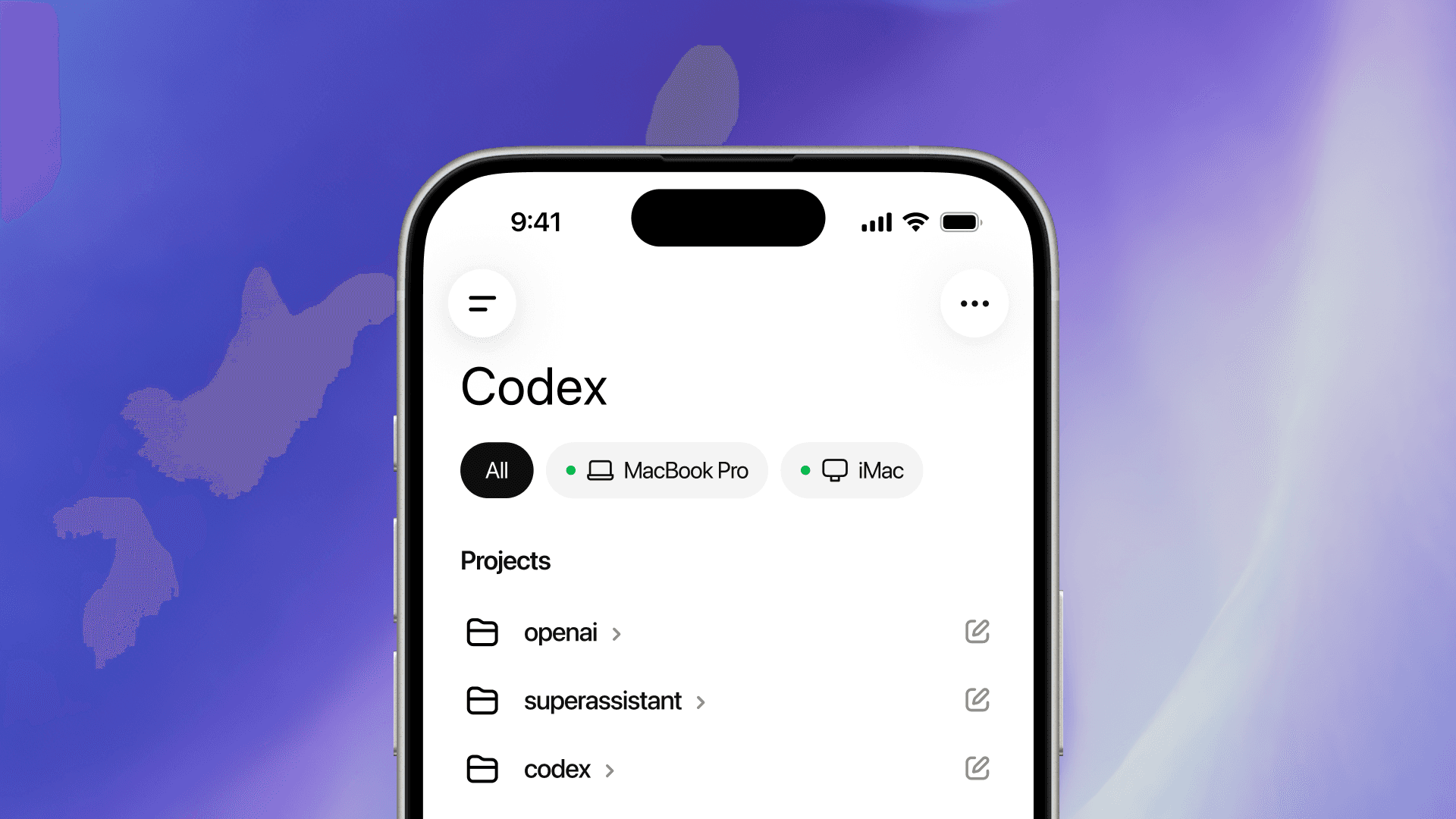
OpenAI announced on May 14 that Codex — its agentic coding assistant capable of running software tasks autonomously across long horizons — is coming to the ChatGPT mobile app on both iOS and Android in a preview release available to all ChatGPT subscription tiers.
The mobile release marks a shift in the mental model for AI-assisted coding. Until now, Codex workflows have been anchored to desktop environments where developers can watch the agent work in real time. Bringing the interface to mobile transforms Codex from a tool that requires a developer's full attention to one that can operate as a background service, with the developer checking in, approving decisions, and redirecting the agent between other tasks.
What Mobile Codex Can Do
The mobile interface gives developers access to all of their active Codex threads simultaneously. From a phone, a developer can review what the agent has produced in each thread, approve or reject commands before they execute, switch between different AI models depending on the task, and start new Codex sessions. The output review capability is particularly significant: Codex agents can run for hours on complex tasks, and the ability to monitor progress and make course corrections from a mobile device without needing to return to a laptop changes the practical economics of delegating long-horizon work.
OpenAI also integrated a Chrome extension earlier in the product's development cycle that allows Codex to work in live browser sessions — combining the mobile monitoring interface with a browser-side execution environment that covers tasks requiring web interaction rather than just local file manipulation.
The mobile release is paired with a macOS desktop environment that keeps credentials and local files on the developer's machine rather than transmitting them to cloud infrastructure. Windows support is described as coming later. That architecture — local secrets, cloud compute — is designed to address the security concerns that have made some enterprise engineering organisations cautious about agentic coding tools with broad filesystem access.
Developer Adoption Context
OpenAI has not published current weekly active user counts for Codex in the May 14 announcement, but internal figures cited in prior reporting suggested the tool was approaching four million weekly active developers as of late April. The mobile release is an attempt to extend that reach to the moments in a developer's day when a laptop is not in front of them: commuting, in meetings, waiting for builds to complete on a separate machine.
The announcement also comes alongside enterprise-focused additions to the Codex product line, including a Remote SSH capability that allows Codex agents to execute work on developer-configured remote servers, HIPAA compliance certification for ChatGPT Enterprise customers in healthcare, and programmatic access tokens that enable Codex to be triggered by automated systems rather than only by manual developer initiation.
The HIPAA certification is notable. Healthcare software development has historically been one of the more conservative sectors for adopting AI tools because of the data handling requirements attached to protected health information. Certifying ChatGPT Enterprise — and by extension Codex — for HIPAA-regulated environments removes a structural barrier for hospital systems, pharmaceutical technology teams, and health IT vendors evaluating AI coding tools.
The Competitive Context
The mobile release positions OpenAI alongside GitHub Copilot, which has had mobile-accessible features through GitHub's mobile app for some time, and against newer agentic coding entrants including Cursor, Devin from Cognition, and Jules from Google DeepMind. The distinction OpenAI is emphasising is not simply that Codex works on mobile but that the full agentic workflow — multi-step task execution, autonomous tool use, long-horizon project management — is accessible from the phone interface, rather than just code suggestions or short completions.
For individual developers and small teams who have adopted Codex for daily use, the mobile release addresses a friction point that has been a consistent piece of user feedback: the inability to check on running agents or redirect them without returning to a desktop. For enterprise organisations evaluating whether to commit to Codex at scale, the combination of mobile monitoring, HIPAA compliance, and Remote SSH capability represents a more complete enterprise-grade offering than was available even two months ago.
Engadget noted the release as part of a broader pattern of OpenAI moving its developer-facing products toward fuller operational independence — tools that handle meaningful engineering work rather than augmenting individual coding steps — a direction the company appears committed to accelerating through 2026.
Sources
- ↳https://techcrunch.com/2026/05/14/openai-says-codex-is-coming-to-your-phone/
- ↳https://sdtimes.com/ai/openai-announces-codex-for-mobile-devices/
- ↳https://www.neowin.net/news/openai-is-bringing-codex-to-the-chatgpt-mobile-apps-on-ios-and-android/
- ↳https://www.engadget.com/2173235/openai-brings-its-codex-coding-app-to-mobile/